




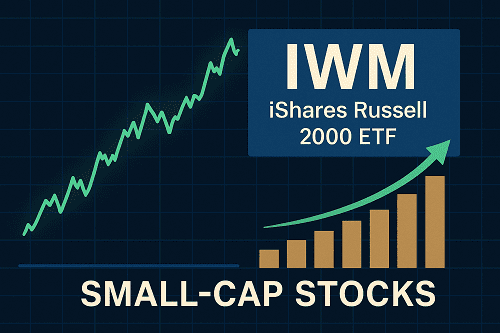
IWM, also known as the iShares Russell 2000 ETF, is a passively managed fund created by BlackRock. It seeks to track the performance of the Russell 2000 Index, a widely recognized benchmark for U.S. small-cap stocks. Keeping an eye on the IWM stock price can provide insights into the health of small-cap stocks in the U.S. market.
The ETF includes companies across a broad range of sectors, typically featuring:
- High-growth emerging businesses
- High innovation potential
- Higher volatility
- Higher sensitivity to economic cycles
It is one of the most heavily traded ETFs in the United States, commonly used for:
- Short-term trading (due to high liquidity)
- Options strategies (IWM options trade with tight spreads)
- Long-term small-cap allocation
Investment Objective & Strategy
IWM’s objective is straightforward:
Replicate the total return of the Russell 2000 Index before fees and expenses.
Fund Strategy
- Full-replication indexing
- Invests directly in securities within the index
- Rebalanced annually to reflect Russell methodology
- Keeps turnover relatively low
- Fully transparent holdings
Because the Russell 2000 is composed of small-cap companies, the ETF may tilt toward:
- Emerging growth industries
- Unprofitable yet high-potential companies
- High beta sectors like biotech and tech services
Key Fund Metrics
Below is a quick at-a-glance metrics overview (approximate, varies with market changes):
| Metric | Value |
|---|---|
| Ticker | IWM |
| Fund Name | iShares Russell 2000 ETF |
| Expense Ratio | 0.19% |
| Asset Class | U.S. Small-Cap Equity |
| Number of Holdings | ~2,000 |
| Inception | May 2000 |
| Issuer | BlackRock / iShares |
| Average Daily Volume | Extremely high (top 5 ETFs) |
| Use Case | Trading, hedging, long-term small-cap exposure |
Performance History
Small-cap stocks typically outperform in early economic expansions and underperform in late cycles or recessionary environments.
Historical Characteristics
- Higher return potential vs large caps over long periods
- Higher volatility and deeper drawdowns
- More sensitive to:
- Interest rate changes
- Credit conditions
- Economic growth
- Market risk appetite
IWM has historically experienced sharper corrections than large-cap ETFs (SPY, VOO) but also stronger rebounds.
Portfolio Composition & Holdings
Sector Breakdown
Sector weights generally include:
- Industrials – largest allocation
- Financials
- Healthcare (including biotech)
- Technology
- Consumer Discretionary
- Energy
- Real Estate
Small-caps often include a large number of unprofitable biotech firms, making the healthcare sector volatile but high-upside.
Top Holdings
While extremely diversified, the top holdings often represent less than 0.5% each, meaning no single company dominates the fund.
IWM is one of the least concentrated ETFs, offering broad exposure to the U.S. small-cap universe.
Why Investors Choose IWM
Here are the main advantages that make IWM a leading small-cap ETF.
1. Exceptional Liquidity
- Massive daily volume
- Tight bid/ask spreads
- Deep options markets
This makes IWM ideal for traders.
2. Pure Small-Cap Exposure
- True representation of small-cap performance
- Captures early-stage growth and innovation sectors
3. Portfolio Diversification
Small caps have different risk/return drivers than large caps, improving long-term portfolio balance.
4. Excellent For Trading Strategies
IWM is heavily used for:
- Options spreads
- Hedging large-cap exposure
- Leveraged strategies
- Pair trades (IWM vs. SPY, IWM vs. QQQ)
Risks & Considerations
While IWM offers strong growth exposure, it carries notable risks.
1. Higher Volatility
Small-caps often fluctuate far more than S&P 500 or Nasdaq 100 stocks.
2. Economic Sensitivity
Small companies feel economic downturns first:
- Tighter credit
- Lower consumer demand
- Higher cost pressures
3. Concentration in Lower-profitability Firms
A significant portion of the index is made up of unprofitable or early-stage companies.
4. Rising Rates Impact
Small-caps typically underperform during periods of rising interest rates due to financing challenges.
How IWM Fits Into a Portfolio
For Long-Term Investors
- Acts as a growth engine
- Diversifies away from large-cap concentration
- Benefits from small-cap cycles
A typical recommended allocation might be:
- 5–15% of an equity portfolio for diversification
- 15–25% for aggressive growth profiles
For Traders
IWM is among the best ETFs for:
- Day trading
- Options trading
- Short-term mean reversion strategies
- Volatility trading
For Hedging
IWM is often shorted against:
- SPY (small vs large cap relative value)
- QQQ (tech vs small cap vol spread)
Recent Market Trends Affecting IWM
IWM tends to outperform during:
- Lower inflation
- Falling interest rates
- Economic expansions
- Increased risk appetite
It tends to lag when:
- Rates rise aggressively
- Credit markets tighten
- Recession signals appear
- Large-cap megacaps dominate market returns
Small-caps have been particularly sensitive to Fed policy shifts and inflation cycles, making IWM a barometer of domestic economic health.
IWM vs. Other Small-Cap ETFs
IWM vs. VTWO (Vanguard Russell 2000 ETF)
- VTWO has lower fees
- Yet IWM offers much higher liquidity for traders
IWM vs. SLY / IJR (S&P 600 ETFs)
S&P 600 ETFs tend to include higher-quality companies due to profitability screens.
Choose IWM if:
- You want maximum exposure
- You want highly liquid options
- You prefer full Russell 2000 representation
Choose IJR/SLY if:
- You want profitability-screened small caps
- You want slightly better historical risk-adjusted returns
Strategies for Trading and Investing in IWM
1. Buy-and-Hold
Great long-term growth exposure.
2. Swing Trading
IWM responds strongly to:
- Economic reports
- Fed decisions
- Market breadth changes
3. Options Income Strategies
Common strategies include:
- Covered calls
- Iron condors
- Vertical spreads
4. Mean Reversion
IWM often overextends during volatility spikes, making it ideal for short-term reversion trades.
5. Pair Trading
Examples:
- Long IWM / Short SPY
- Long QQQ / Short IWM (tech vs small-cap spread)
Tax Considerations
- Dividends are generally qualified but modest
- Short-term trading generates taxable events
- ETF structure minimizes capital-gain distributions
Always consult a tax professional for specific circumstances.
Outlook for IWM
Future performance depends heavily on:
- Fed rate policy
- Economic growth trajectory
- Credit conditions
- Market breadth expansion
- Earnings improvement among small-cap companies
If economic conditions improve and rates stabilize or decline, IWM could outperform large caps dramatically due to its leverage to economic momentum.
Frequently Asked Questions (FAQ)
Is IWM a good ETF?
Yes—especially for growth, diversification, and trading liquidity.
Is IWM risky?
Yes, more volatile than large-cap ETFs.
Is IWM good for long-term investors?
Historically, small caps outperform over long horizons.
Is IWM better than VTWO?
IWM is better for trading and liquidity.
VTWO is better for slightly lower expense ratios.
What does IWM invest in?
Around 2,000 U.S. small-cap stocks across all sectors.
Conclusion: Should You Invest in IWM?
IWM is one of the most important and influential ETFs in the market today.
It provides unmatched exposure to small-cap U.S. stocks, exceptional trading liquidity, vast diversification, and strong long-term growth prospects.
Choose IWM if you want:
- High-growth potential
- Tactical trading opportunities
- Broad small-cap diversification
- A liquid vehicle for hedging
It remains one of the most essential ETFs for both active traders and long-term investors.
 XAUT-USD
 AMD
AMD JNJ
JNJ
 MARA
MARA SHOP
SHOP UNH
UNH BULL
BULL EURUSD=X
 CL=F
CL=F